SALT LAKE CITY -- State road planners want future streets to be able to handle more than just cars.
The Wasatch Front Regional Council is currently talking with cities in the region about how to implement a policy that would make roads more accessible for all users, not just motorists.
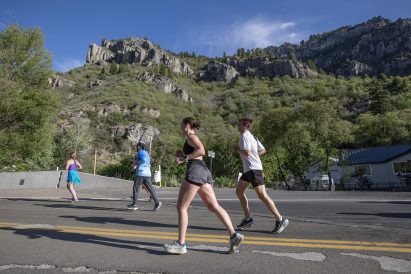
The policy, dubbed "Complete Streets," ensures that the entire right-of-way of a street is planned, designed and operated to provide safe access for cars, cyclists, pedestrians, transit users and even freight haulers.
The council recently sent a questionnaire to local city officials, asking for information on road plans and specifics on how each city plans to handle growth.
John LaPlante, an engineer working with the WFRC on the Complete Streets program, said Complete Streets goals include more bike paths, better pedestrian crossings and sidewalks, medians and reduced road speeds.
Ned Hacker, long-range planning manager for the WFRC, said the initiative will decrease congestion, make for cleaner air, save money and contribute to Utah's overall public health.
He said considering all users in future road planning is essential, not only to combat projected growth challenges, but also because many people simply don't have cars or are unable to drive.
According to the 2010 Census, 31 percent of Utahns are under age 18, 15 percent are disabled, 13 percent are seniors and 13 percent live in poverty -- all factors that make driving or owning a car difficult, Hacker said.
Hacker said Complete Streets is not a mandate to accommodate everyone and that each jurisdiction will be able to weigh the benefits and shortcomings of the idea.
"There has been some concern that we are trying to make policy," Hacker said. "But really, we're just trying to help educate folks on what cities can do to possibly implement some draft ordinances."
Hacker said not all users can, or should be, accommodated in every place on every street, so Complete Streets procedures guide jurisdictions on how to make decisions in context with the intricacies of each individual transportation system.
"Each roadway is tailored to what is feasible and desired," Hacker said.
The WFRC says that both Salt Lake County and Salt Lake City adopted Complete Streets ordinances in 2010, and now the focus shifts to the northern part of the region.


Comments